ZGCTA Activities
2026 Zhongguancun Enterprises Go Global Lecture: Special Session on Chinese Enterprises' Investment & Strategy in the Republic of Korea Held Successfully
Date:2026-07-23 09:44
On July 15, the 2026 2026 Zhongguancun Enterprises Go Global Lecture: Special Session on Chinese Enterprises' Investment & Strategy in the Republic of Korea was successfully held at the Future Science City in Changping District, Beijing. Combining online and offline formats, the event brought together over 200 representatives of sci-tech enterprises, heads of institutions, as well as experts and scholars.
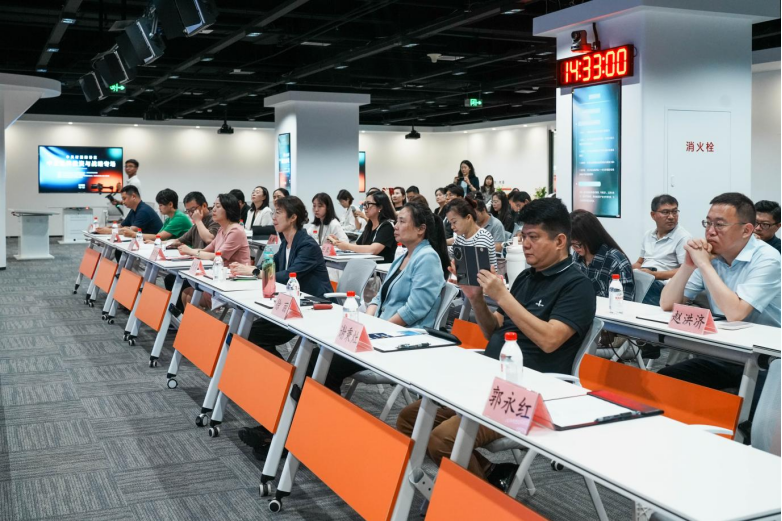
Event Venue
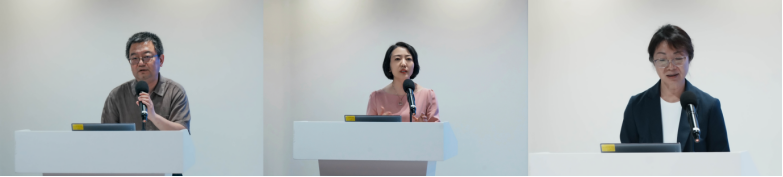
Leadership Remarks
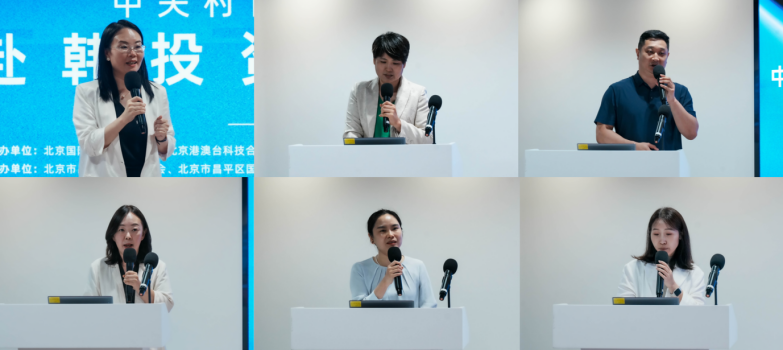
Moderator and Guest Speakers
The event was co-hosted by the Beijing International Cooperation Center of Science and Technology (Beijing Science and Technology Cooperation Center for Hong Kong, Macao and Taiwan) and the ZGC Global High-Level Think Tank Alliance (hereinafter referred to as ''ZGCTA''). It was organized by the Beijing Changping District Overseas Friendship Association and the Beijing Changping District Chamber of International Commerce, with co-support from Beijing Future Science City Industrial Development Co., Ltd., Beijing Shuanggao Future Technology Service Co., Ltd., and FuTech Development (Beijing) Co., Ltd. The event received support from the United Front Department of Beijing Changping District Committee of the Communist Party of China and the Changping District Bureau of Commerce of Beijing Municipality.
Zhang Zehao, Deputy Director of the Beijing International Cooperation Center of Science and Technology (Beijing Science and Technology Cooperation Center for Hong Kong, Macao and Taiwan), Li Junkai, Secretary-General of ZGCTA and Director of the Center for International and Regional Cooperation at the Beijing Academy of Science and Technology, and Cao Wenli, Deputy Director of the United Front Department of Beijing Changping District Committee of the Communist Party of China, attended the event and delivered opening remarks. Guo Yonghong, Vice President of the Changping District Overseas Friendship Association and the Changping District Chamber of International Commerce, moderated the event.
As a key platform of the Beijing Municipal Science and Technology Commission and the Administrative Commission of Zhongguancun Science Park for supporting the internationalization of innovation entities and deepening international sci-tech cooperation, the Zhongguancun Enterprises Go Global Lecture Series has, since its launch, continuously focused on the practical needs of enterprises going global. It has grown into a flagship branded event that helps enterprises broaden their international horizons, enhance cross-border operational capabilities, and advance the global deployment of innovation achievements. This session centered on three core demands of Chinese enterprises: investment in the Republic of Korea (ROK), production capacity layout and brand internationalization. It featured thematic sharing on priority topics including the ROK's investment environment, brand localization, intellectual property (IP) protection, cross-border financial services, and full-chain services for China-ROK cooperation, building a targeted docking platform for enterprises to understand the ROK market, refine their overseas strategies, and connect with professional service resources.
In his remarks, Zhang Zehao noted that this year marks the 34th anniversary of the establishment of diplomatic relations between China and the ROK. The two countries boast remarkable complementary industrial advantages and a solid foundation for economic and trade cooperation, with vast cooperation potential in strategic emerging industries such as semiconductors, artificial intelligence, new energy and biomedicine. With the steady implementation of the RCEP Agreement and the rollout of a series of industrial investment incentive policies in the ROK, Beijing enterprises are embracing a new window of opportunity to expand their presence in the ROK and explore the Northeast Asian market. The Beijing International Cooperation Center of Science and Technology will adhere to a problem-oriented and demand-driven approach. Leveraging overseas representative offices and its international cooperation network, it will continue to develop the Zhongguancun Enterprises Go Global Lecture Series brand, deliver targeted and specialized capacity-building programs for different countries and industrial tracks, and support enterprises in understanding overseas markets, seizing cooperation opportunities and strengthening risk prevention capabilities, so as to facilitate their steady and in-depth participation in international sci-tech cooperation and industrial synergy.
Li Junkai stated that enterprise internationalization is not a single-link market behavior, but a systematic project covering strategy, compliance, operations, talent and other dimensions. ZGCTA currently connects 102 member institutions across 19 countries worldwide, pooling resources from think tanks, universities and research institutes, industrial experts and professional service providers. This lecture session integrated professional forces including the ROK's official investment promotion agencies, cross-border legal firms, financial service providers, brand operators and overseas service stations. It aims to help enterprises translate fragmented information into systematic judgments, and align individual demands into end-to-end services, effectively reducing decision-making costs and trial-and-error risks for enterprises going global.
Cao Wenli introduced the opening-up and international economic and trade cooperation progress of Changping District. She noted that as a core bearing area for building the Beijing (Beijing-Tianjin-Hebei) International Center for Science and Technology Innovation, Changping District has in recent years continued to advance key areas including foreign investment, foreign trade, outbound investment, headquarters economy and international cooperation, continuously improving enterprise service platforms and optimizing the business environment. Changping District will further leverage its strengths in sci-tech innovation platforms and overseas exchange resources, and support enterprises in high-standard "going global" with a more open attitude, more pragmatic measures and higher-quality services.
During the keynote session, Li Lihua, Director of the Beijing Representative Office of the Korea Trade-Investment Promotion Agency (KOTRA), delivered a thematic sharing entitled the ROK's Investment Environment and New Models of Investment Cooperation. She systematically interpreted the ROK's foreign investment landscape, latest market trends, foreign access regulations and incentive policies. Combined with practical cases, she analyzed strategic opportunities, feasible directions and key implementation steps for Chinese enterprises investing in the ROK. She also proposed that Chinese and the ROK enterprises can jointly explore third-country markets via the ROK platform, and KOTRA will provide full-cycle support for enterprises through one-stop services, compliance guidance and annual investment summits.
Zhao Yang, China Chief Representative of the Seoul School of Integrated Sciences and Technologies (aSSIST) and Executive Dean of Guanlan Business School, delivered a keynote speech entitled From Product Export to Brand Internationalization: Practical Pathways for Chinese Enterprises Entering the ROK Market. He focused on brand awareness building, localization adaptation and long-term operation in the ROK market, and shared implementation paths for Chinese enterprises to shift from product export to localized brand building, as well as the CACM theoretical model for overseas expansion actions.
Pei Huishan, Partner of Zhonglun W&D Law Firm and member of the Cross-border Investment and M&A Specialized Committee of the Beijing Lawyers Association, delivered a speech entitled IP Layout and Dispute Resolution Strategies for Chinese Enterprises Expanding to the ROK. She systematically introduced the ROK's IP system and key layout priorities for enterprises, focused on core areas such as patent, trademark and trade secret protection, data compliance, and infringement remedies, and put forward recommendations for full-cycle compliance development and dispute response.
Mao Qiongye, Deputy General Manager of the International Business Department at Bank of Ningbo Beijing Branch, delivered a thematic sharing entitled Financial Practice Difficulties and Solutions for Chinese Enterprises Expanding to the ROK. Addressing common enterprise pain points – including ODI compliance requirements across pre-investment, mid-investment and post-investment phases, China-ROK cross-border capital management, financial support for local operations, and comprehensive risk control – she introduced financial solutions covering cross-border settlement, investment and financing services, digital treasury management and holistic risk management.
Cheng Tao, Head of the Zhongguancun Enterprise Service Representative Office in Seoul, the ROK, delivered a keynote sharing entitled Escorting Chinese Enterprises' Overseas Expansion: Full-Chain Services of the Zhongguancun Seoul Office for China-ROK Cooperation. He provided a comprehensive overview of core resources and industrial layout of the ROK's innovation ecosystem, introduced the office's one-stop service support system, and shared practical pathways for Chinese enterprises to carry out sci-tech, industrial and industry-university-research cooperation in the ROK with real-world cases.
During the interactive Q&A session, participants engaged in in-depth discussions with speakers on practical issues such as the ROK's investment policies, brand localization, IP risks, cross-border finance and on-the-ground support services.
Adopting an integrated model of "policy interpretation + practical sharing + resource docking", this session accurately addressed the core demands of Chinese enterprises investing in the ROK, and provided actionable references with both strategic vision and practical value for enterprises exploring the Northeast Asian market. Going forward, the organizers will continue to align with the core needs of enterprise internationalization, coordinate government departments, think tank institutions, professional service providers and overseas innovation resources, and roll out a series of country-specific, professional and targeted events. These efforts will support enterprises in advancing their international layout steadily, and continuously deepen China-ROK sci-tech innovation cooperation and industrial synergy.
